
All of the must-read news about the Golden State in one place.
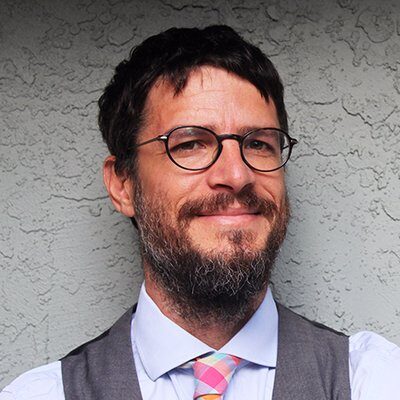
Hi, I’m Mike McPhate, a former California correspondent for the New York Times. I survey more than 80 news and social media sites daily, then send you a tightly crafted email with only the most informative and delightful bits.
Each weekday at about 6 a.m., you’ll get an email like this.



Good morning. It’s Thursday, April 25.
- Protests convulse USC and Humboldt campuses.
- Silicon Valley billionaire settles insider trading charges.
- And the California towns where $150,000 buys a home.
Statewide
1.
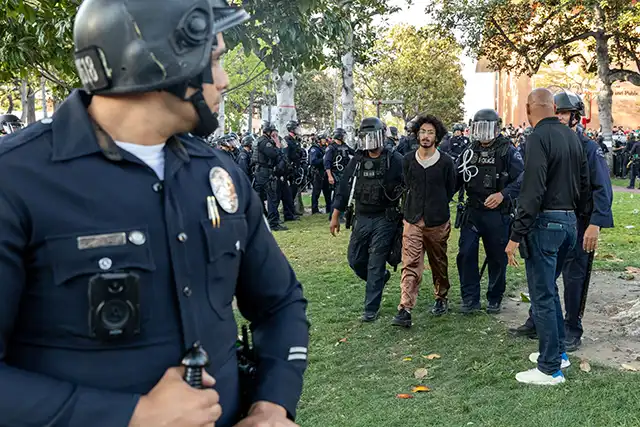
Police officers in riot gear arrested 93 people at USC on Wednesday as students mounted a boisterous protest against the Israel-Hamas war. Demonstrators chanted “Shame on you!” as police took students away. Up north in Arcata, where Cal Poly Humboldt students have barricaded themselves inside an administration building, law enforcement arrested three people and university leaders announced that a campus lockdown would be extended through the weekend. L.A. Times | Lost Coast Outpost
- California’s protests are part a wave of antiwar activism at colleges across the U.S. See a protest map. 👉 Wall Street Journal
2.

Hamas on Wednesday published its first video of Hersh Goldberg-Polin, a Berkeley-born man who was taken hostage while attending the Supernova music festival in southern Israel on Oct. 7. Speaking under duress, the sickly-looking 23-year-old said he’s been held for “nearly 200 days,” suggesting the footage is recent. His left arm is missing from below the elbow after being blown off during the attack. Goldberg-Polin’s parents said watching the video was overwhelming. They addressed their son: “If you can hear us, we are telling you, we love you, stay strong, survive. BBC | Washington Post
3.
When people lament the stratospheric costs of California living, what they often mean is coastal California living. Further inland are cities up and down the state where families can find homes in line with the national median sale price, now around $415,000. Look even harder, wrote reporter Terry Castleman, and you can find a handful of small towns — from Trona to Tulelake — where $150,000 buys a home. “Like so many California real estate deals, you have to journey off the beaten path, make compromises and have some imagination,” he wrote. L.A. Times
4.
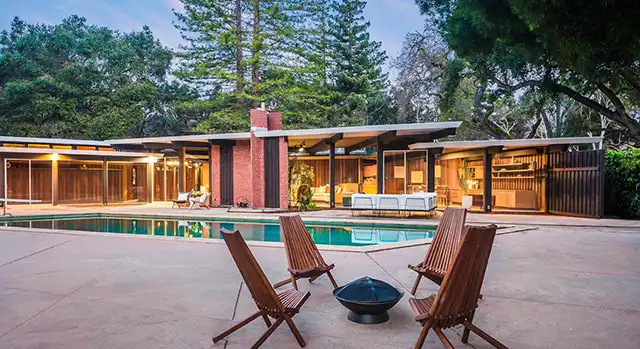
Meanwhile, on the opposite end of the price spectrum, here are a few eye-catching properties now up for grabs.
- Richard Neutra is best known for his desert masterpieces around Palm Springs. In 1950, he brought his affinity for open living spaces and big windows to the coast, creating a two-bedroom home with ocean views on the Palos Verdes Peninsula. Yours for $5.5 million. Realtor.com
- Joseph Eichler’s tract housing defined suburban San Francisco in the 1950s. When the architect-developer built his own residence in Atherton, he drew inspiration from Frank Lloyd Wright, featuring built-in furniture and a wall of glass in the rear. Asking: nearly $6.4 million. SFGATE | Dwell
- The photographer Annie Leibovitz is giving up her 65-acre farm in Bolinas. Nestled among other agricultural properties an hour north of San Francisco, the historic estate has panoramic views of a lagoon and a seven-stall horse barn. Yours for $9 million. SF Standard | Wall Street Journal
Northern California
5.
A Sonoma County sheriff’s deputy appeared to dissuade a woman from pressing charges after she reported being sexually assaulted by a massage therapist at a spa in Sonoma on Sept. 5, 2022. In body-camera video, the woman told a responding deputy, “I want to prosecute. I can’t live with myself for someone else to go through it.“ Sgt. Hector Rodriguez fiddled with his pen and talked about the challenges of obtaining a confession. “It’s your word against his,” he concludes. “Quite honestly, the district attorney probably won’t prosecute because there isn’t enough evidence to show it happened.” The woman dropped the case. S.F. Chronicle
6.
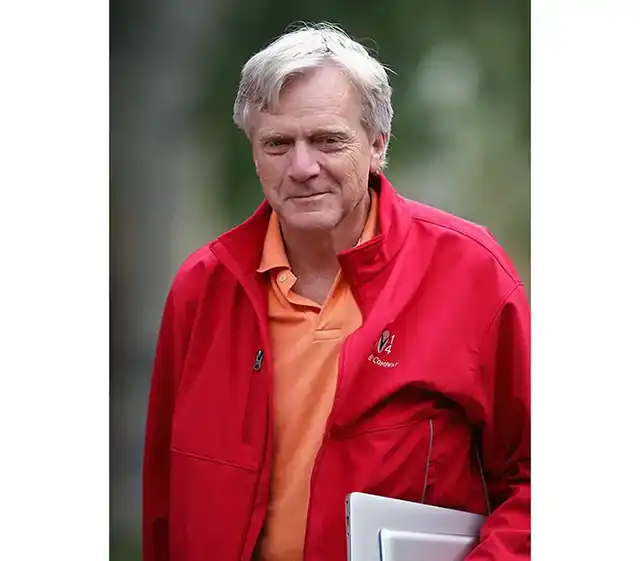
Andreas Bechtolsheim, the first investor in Google, has an estimated fortune of $16 billion. That apparently wasn’t enough. Last month, he settled charges that he engaged in insider trading for a profit of $415,726. “The history of Silicon Valley is full of big bets and abrupt downfalls,” wrote tech journalist David Streitfeld, “but rarely has anyone traded his reputation for seemingly so little reward.” N.Y. Times
7.
Dharmesh Patel, the Pasadena radiologist who drove his family off the cliff known as Devil’s Slide south of San Francisco last year, was suffering from delusions and feared his children might be sex trafficked, a psychologist testified Wednesday. “It was paranoid and kind of delusional thinking that he acted on at the time to protect his family from a worse fate,” Dr. Mark Patterson said. Prosecutors have charged Patel with three counts of attempted murder. He has pleaded not guilty and is trying to qualify for mental health treatment in lieu of prison. S.F. Chronicle | Mercury News
8.
The mayor of San Jose, Matt Mahan, was giving a television interview on a downtown sidewalk when a man walked up, unleashed a string of profanities, and threw a punch at a plainclothes police officer on the mayor’s security detail. As cameras rolled, the two fought for several minutes before bystanders helped detain the man. The suspect was charged with felony battery on a police officer, among other charges. A spokesperson for Mahan said the mayor was alert to the need to address crime and mental illness in the city. KRON | San Jose Spotlight

Give something they’ll open every day.
Give the gift of the California Sun.
9.
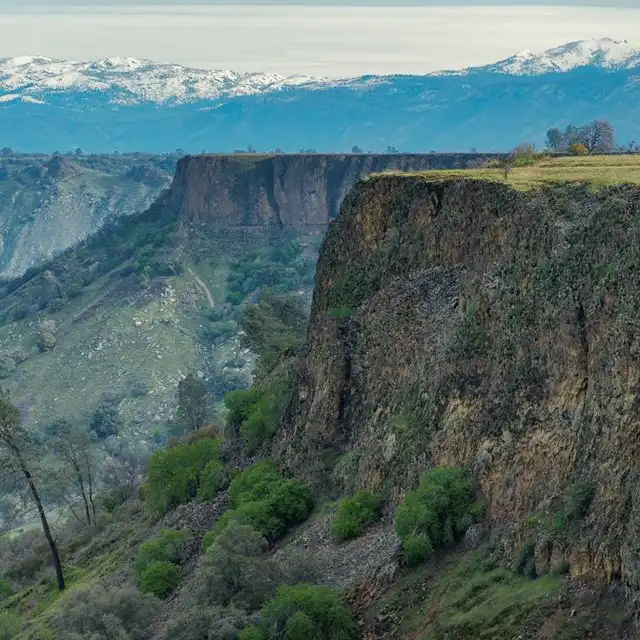
Along the eastern edge of the San Joaquin Valley, a series of flat-topped mesas rise abruptly from the valley floor, the result of volcanic eruptions that filled a river canyon millions of years ago. Over time, the lava hardened, the surrounding earth eroded away, and what was once river bottom became mountain top. In the spring, hikers atop the most prominent mesa, Big Table Mountain, are treated to abundant wildflowers and sweeping views of the valley. A Fresno Bee journalist flew a drone over the Ruth McKenzie Table Mountain Preserve. YouTube (~2:30 mins)
Southern California
10.
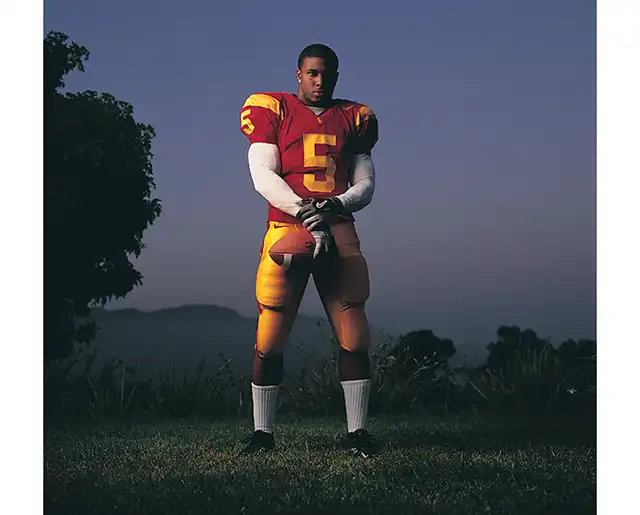
In 2010, the former USC football star Reggie Bush forfeited his Heisman Trophy after an investigation found that he had accepted gifts from prospective sports agents. On Wednesday, Bush got his trophy back as the Heisman Trust explained that “enormous changes in college athletics” had undermined the basis for withholding the award. After a rules change in 2021, college players now commonly make millions of dollars a year from endorsements. Bush, who denied wrongdoing, portrayed the Heisman reversal as vindication. ESPN | L.A. Times
11.
“No one is above the law.”
A top advisor to L.A. County District Attorney George Gascón was charged with 11 felonies on Wednesday. California’s attorney general, Rob Bonta, accused Diana Teran of downloading sheriff’s deputy files without permission in 2018 when she worked in the sheriff’s department. She was then said to use the data without authorization after joining Gascón’s office, where she oversaw a unit that handled prosecutions of police officers. Former Sheriff Alex Villanueva, who often clashed with Gascón’s office, gloated over news of the charges. Courthouse News | L.A. Times
12.
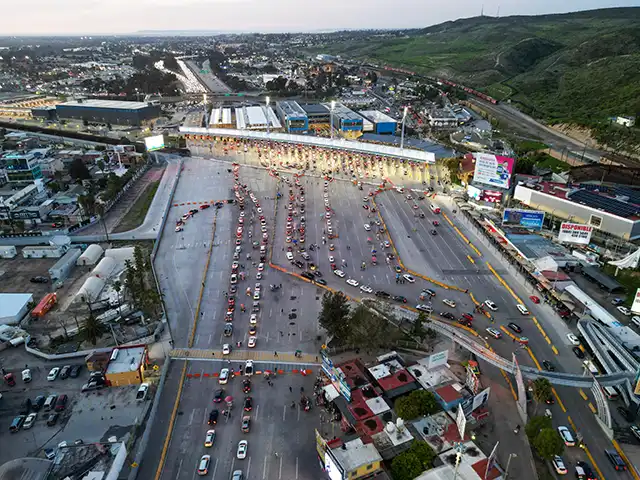
The lifeblood of San Diego’s border community of San Ysidro is the stream of students, families, health-care workers, and others who cross daily to and from Mexico. But excruciatingly slow lines at the checkpoint are now hammering the neighborhood’s small businesses, as wait times that were once 30 minutes now stretch as long as four hours. One study found that even 10 minutes of extra waiting equates to millions of dollars in lost economic activity per year. “This is families losing their incomes,” said Kenia Zamarripa, a Chamber of Commerce official. CalMatters
I count on word of mouth to grow the California Sun. Please consider sharing it with a friend. Send them here.
Thanks for reading!
The California Sun is written by Mike McPhate, a former California correspondent for the New York Times.
Make a one-time contribution to the California Sun.
Give a subscription as a gift.
Get a California Sun T-shirt, phone case, hat, hoodie, or tote.
Forward this email to a friend.
Click here to stop delivery, and here to update your billing information. To change your email address please email me: mike@californiasun.co. (Note: Unsubscribing here does not cancel payments. To do that click here.)

The California Sun, PO Box 6868, Los Osos, CA 93412
Get your daily dose of the Golden State.
We also have our own stories to tell.
The Sun helps you discover amazing journalism in California. But the news can be a bit grim. That’s why we write a couple stories every week that we think inspire awe — on historical wonders, innovative people, or beautiful photography.